
Facial Pain
Orofacial pain refers to pain or tenderness affecting the mouth, jaw, face, or surrounding areas. Symptoms can range from mild discomfort to severe, persistent pain that interferes with eating, speaking, sleeping, and other daily activities.
There are several types of orofacial pain, including myofascial pain and neuropathic pain. Because facial pain can have many different causes, an accurate diagnosis is an important first step toward effective treatment.
With the right evaluation and personalized treatment plan, many patients can find meaningful relief from their symptoms and improve their quality of life.
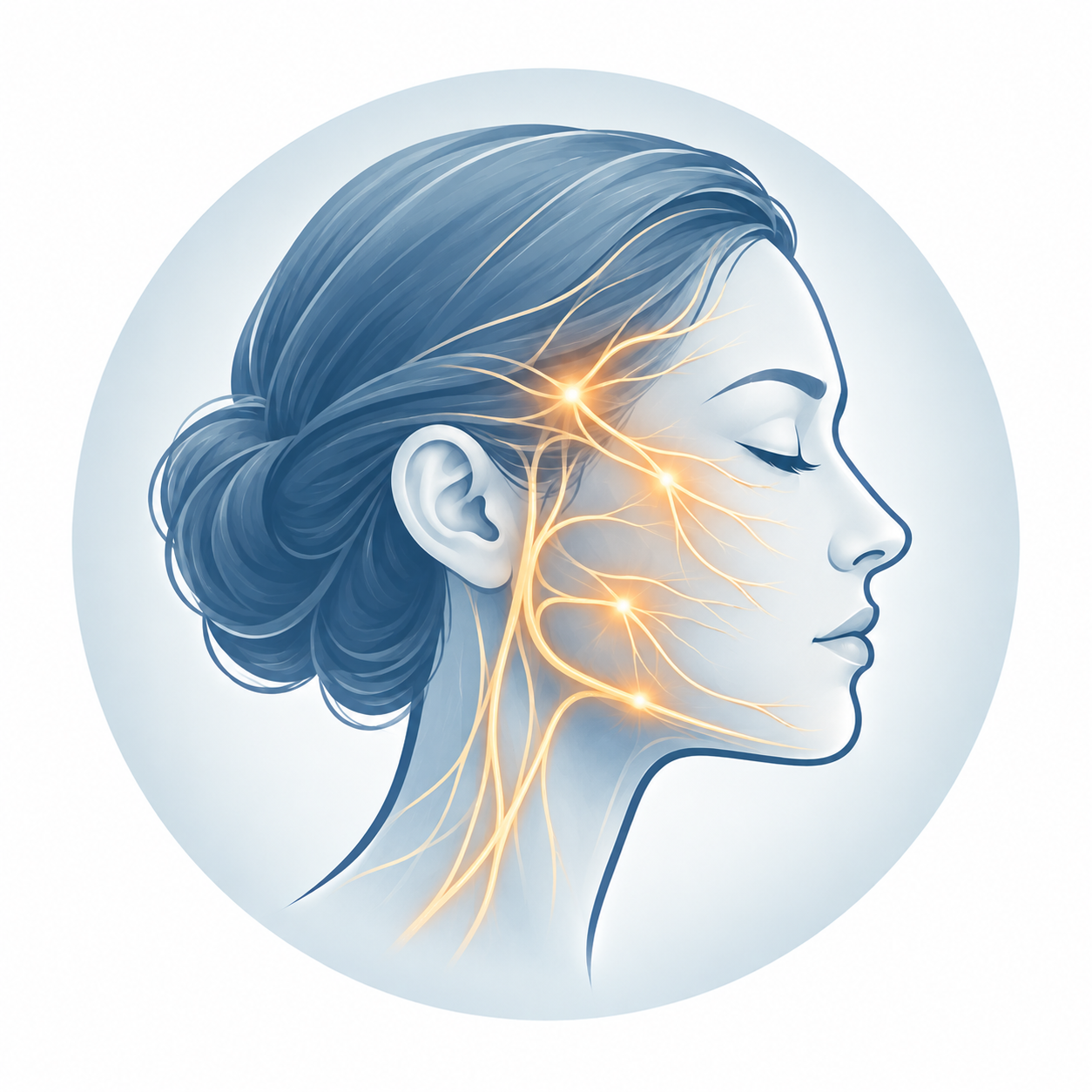
Neuropathic Pain Disorders
Neuropathic pain disorders occur when the nervous system is damaged, injured, or otherwise functioning abnormally. These conditions can cause persistent, intermittent, or severe pain affecting the head, face, mouth, or jaw. Some of the neuropathic pain disorders that commonly affect the head and facial regions include:
Trigeminal Neuralgia
Trigeminal neuralgia (TN) is a facial pain disorder affecting the trigeminal nerve, which carries sensation from the face to the brain. It typically causes sudden, severe, electric-shock-like or stabbing pain on one side of the face. Attacks may be triggered by everyday activities such as eating, speaking, brushing the teeth, or lightly touching the face.
Atypical Odontalgia
Also known as persistent idiopathic dentoalveolar pain or “phantom tooth” pain, atypical odontalgia is persistent pain in a tooth or an area where dental treatment has occurred without an identifiable dental problem that adequately explains the symptoms.
Complex Regional Pain Syndrome
Complex regional pain syndrome (CRPS) can occasionally affect the craniofacial region, although it more commonly affects the arms or legs. Symptoms may include continuous burning or severe pain, increased sensitivity to touch, swelling, stiffness, and changes in skin temperature, color, or texture.
Oral Nerve Injury
Oral nerve injury can result in chronic pain when nerves in the jaw, mouth, or surrounding structures are damaged, often following a dental procedure or injury. Symptoms may include burning pain, numbness, tingling, or altered sensation involving the tongue, mouth, or lower lip.
Burning Mouth Syndrome
Burning mouth syndrome (BMS) causes a burning, scalding, or painful sensation in the mouth, often involving the tongue, lips, or other areas. Some people may also experience dry mouth or changes in taste.
Atypical Facial Pain
Atypical facial pain is a diagnosis of exclusion, meaning other potential causes of persistent facial pain must first be considered and ruled out. Symptoms may resemble those of trigeminal neuralgia, which can make these conditions difficult to distinguish. In some cases, the pain may be related to dysfunction or neuropathy involving the trigeminal nerve.
Myofascial Pain Conditions
Myofascial pain involves the muscles and connective tissues of the face and jaw and may be associated with sensitive areas known as trigger points. When activated, these areas can produce localized soreness, aching, or burning pain. Pain may also be referred, meaning it is felt in an area away from the original source.
Factors that may contribute to active muscle trigger points include:
Repetitive or excessive muscle use
Poor posture
Direct injury or trauma
Sustained physical exertion
Chronic muscle tension or jaw clenching
Prolonged inactivity
Chronic myofascial pain, including pain associated with TMJ disorders, may require a combination of treatments. Depending on the individual and underlying cause, a comprehensive treatment plan may include physical therapy, therapeutic injections, medication management, and other targeted therapies.
Diagnosis
Diagnosing orofacial pain can be challenging because different conditions may cause similar or overlapping symptoms. An accurate diagnosis often requires a comprehensive and multidisciplinary approach.
Your provider may:
Review your complete medical history and symptoms
Perform a detailed physical examination
Evaluate the jaw, facial muscles, nerves, and surrounding structures
Review previous dental or medical procedures and injuries
Order appropriate diagnostic tests or imaging when necessary
Providers who specialize in Orofacial Pain are trained to evaluate the broad range of conditions that can cause facial and oral pain. By considering your individual symptoms and examination findings, they can work toward identifying the factors contributing to your pain and developing an appropriate treatment plan.
In some cases, the precise cause of neuropathic pain cannot be determined. When this occurs, treatment may involve a process of carefully evaluating different therapies to determine which approaches provide the greatest relief. Working with a provider who offers a range of treatment options can help ensure that your care is individualized to your symptoms and needs.