
Ear & TMJ
Tinnitus
Tinnitus is perception of sound when there is no external sound source. noise in the ear when there is no actual sound outside the ear. It is often described as ringing in the ears, but it can also sound like buzzing, humming, hissing, clicking, roaring, or other noises.
Tinnitus may be temporary or persistent, and it can occur in one or both ears. For some people, it can affect sleep, concentration, or overall quality of life.
Intensity and frequency of tinnitus can vary from person to person. Some people experience occasional symptoms, while others may notice persistent or recurring sounds.
Causes
Tinnitus can have many potential causes, ranging from conditions affecting the ears to certain medications and other medical conditions. Possible contributing factors include:
Ear-related conditions: Ear infections, earwax blockage, hearing loss, or damage or disease affecting the inner ear
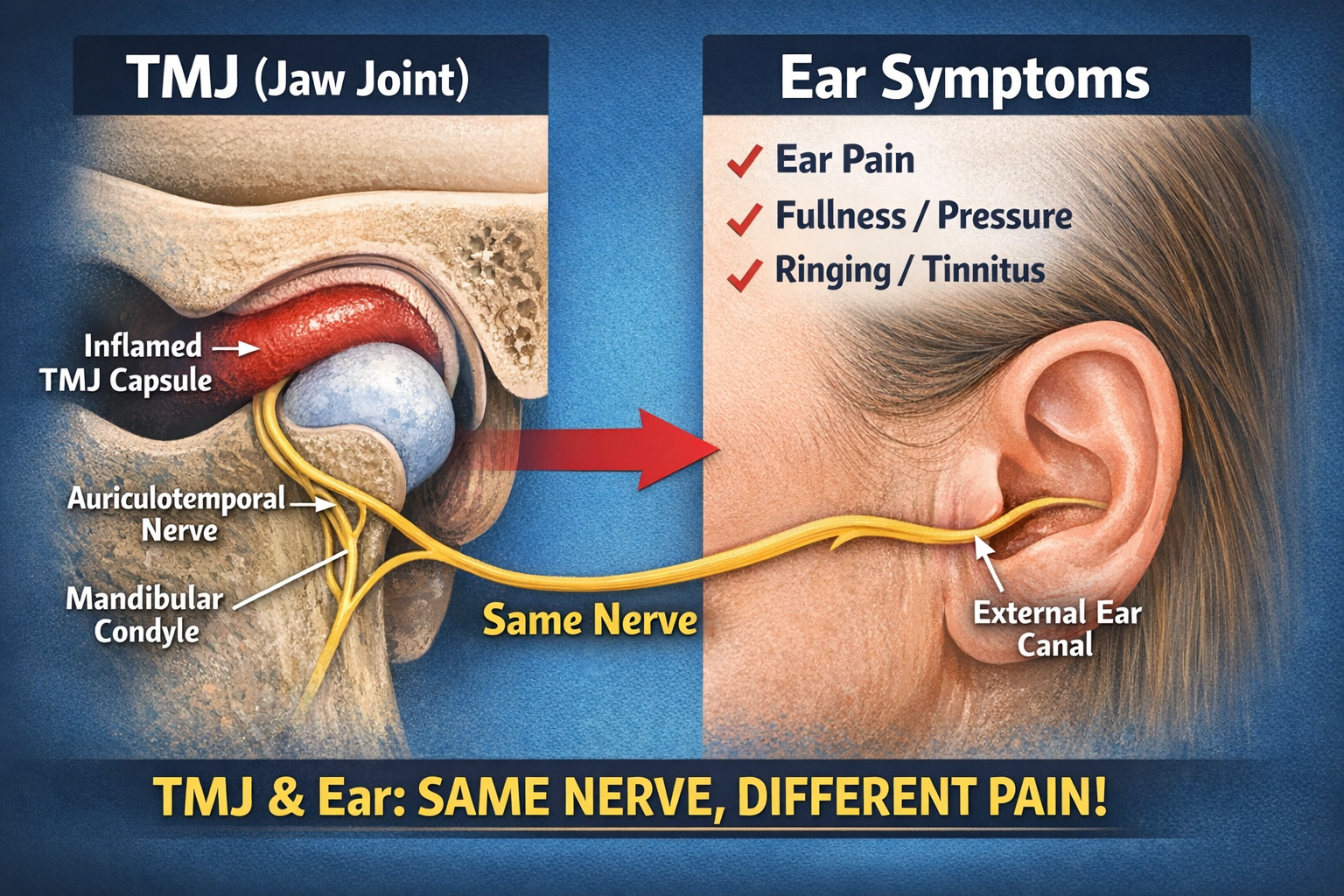
TMJ disorders: Problems involving the jaw joints or surrounding muscles may contribute to tinnitus or related ear symptoms
Medication side effects: Certain medications may cause or worsen tinnitus
Other medical conditions: Conditions such as high blood pressure, allergies, or anemia may be associated with tinnitus
Because tinnitus can have many possible causes, a thorough evaluation can help determine whether an underlying ear, jaw, or medical condition may be contributing to your symptoms.